

White Paper · eSIM + AXON IDToolkit
Boost New Subscriber Activations. Enable Remote, Instant eSIM Activation.
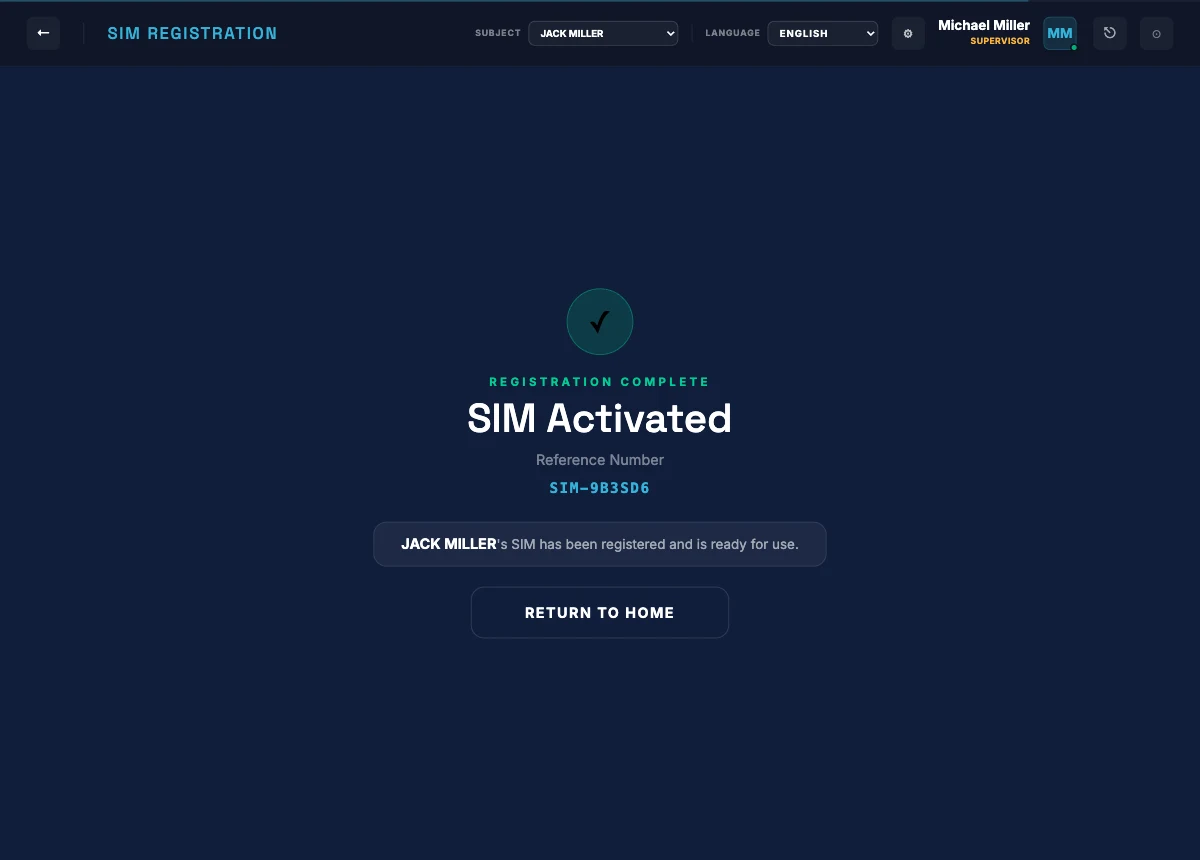
eSIM removes the physical hand-off that used to interrupt digital acquisition. Combined with AXON’s IDToolkit, a customer can verify their identity, choose or port a number, select a plan and become an active subscriber in one sitting. Operators for whom AXON has deployed this channel report that it now contributes up to 30% of their new activations.
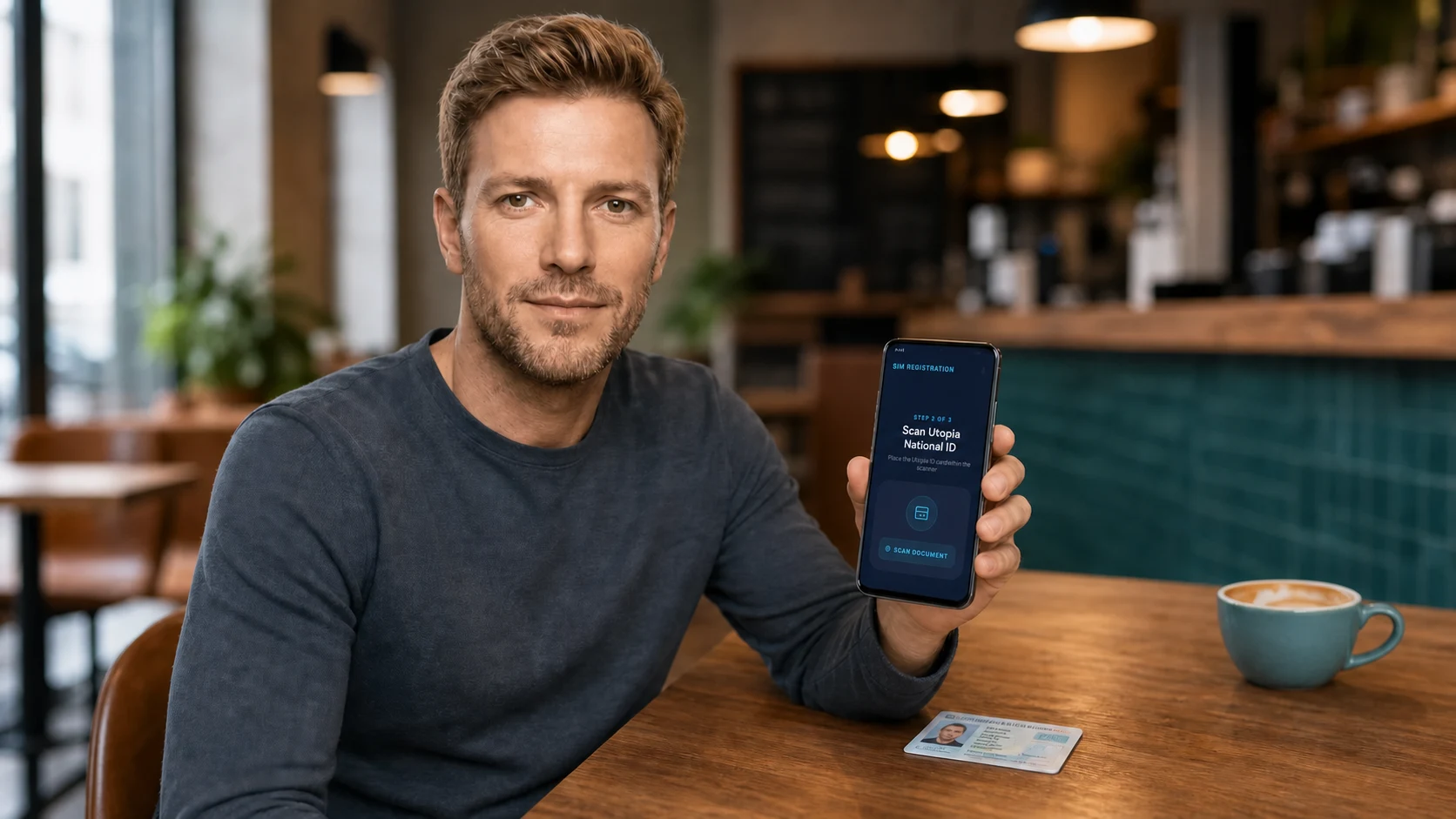
The operator that removes the last physical step changes the market
This is not a cosmetic improvement to an existing onboarding form. It changes where acquisition can happen. A customer can see an offer, verify their identity, pass the operator’s risk rules, complete payment or contract approval, receive an eSIM profile and connect to the network in the same sitting. No store visit. No courier hand-off. No “we will activate you later” moment where the lead leaks away.
That matters because MNO growth is increasingly fought outside the branch. Digital banks, handset retailers, MVNOs, travel brands, fintech wallets and comparison sites are all becoming subscriber acquisition surfaces. If the operator cannot activate instantly inside those surfaces, someone else will own the moment of intent. The customer-reported result is already material: in AXON deployments, as much as 30% of new activation volume is now coming through this channel.
The activation journey
From intent to an active subscriber
One continuous, policy-controlled digital journey.
Step 01
Choose an offer
From any digital acquisition channel
Step 02
Prove identity
Document, NFC and biometrics
Step 03
Pass approval
Risk, contract and payment rules
Step 04
Choose service
Number, port-in and plan selection
Step 05
Receive eSIM
Secure profile delivery
Step 06
Connect instantly
An active subscriber in one sitting
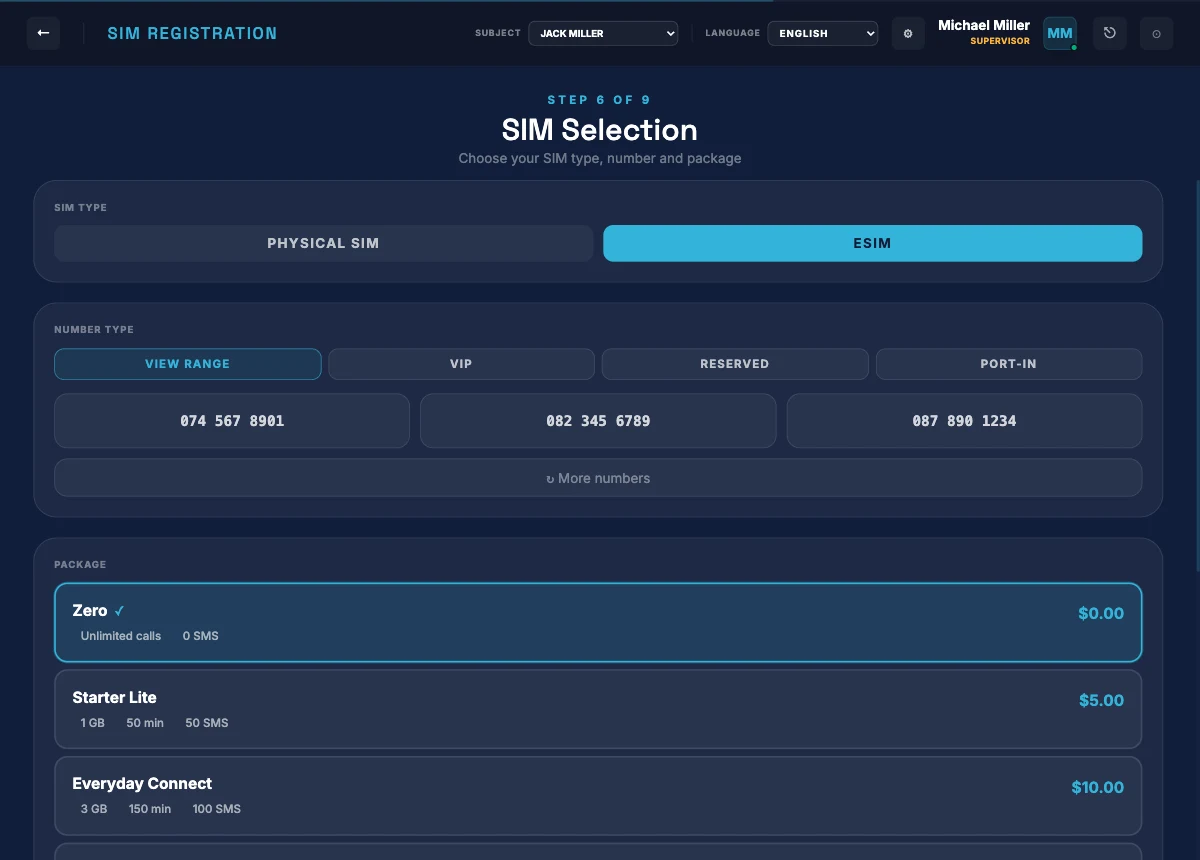
Let the subscriber choose the number — and control what happens next
A genuinely digital journey should not stop once identity has been verified. Polaris can expose available number inventory dynamically, allowing the subscriber to choose from a live range, select a premium or reserved number, or bring an existing number through a port-in journey. The customer can then choose a package and proceed directly to eSIM allocation and activation without an agent re-keying the request.
The same self-service model can continue after acquisition. Number porting, SIM swaps and replacement eSIM journeys can be initiated by the subscriber, protected by fresh identity and liveness checks, and routed through the operator’s risk rules before any network change is released. That turns onboarding from a one-off digital form into a secure subscriber lifecycle channel — one that removes contact-centre load while keeping high-risk changes under policy control.
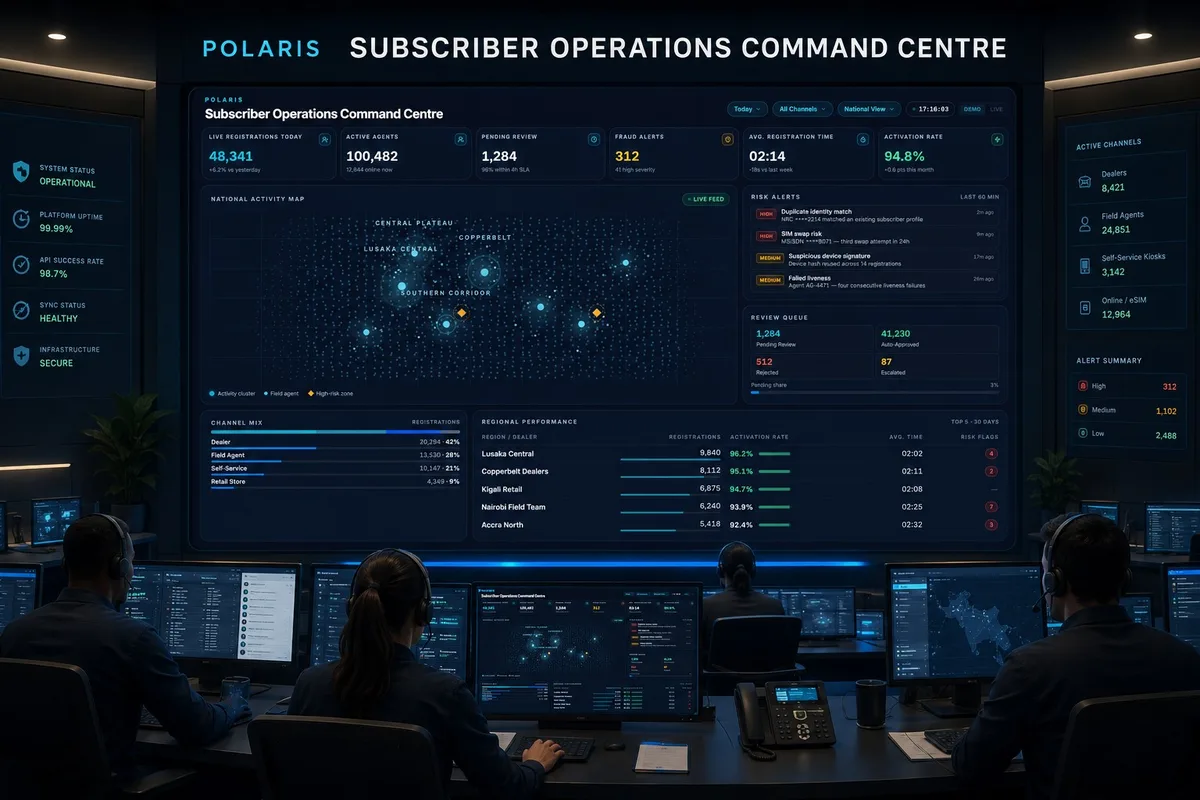
The prize is speed, but the risk is uncontrolled activation
The reason many operators hesitate is valid: once activation becomes instant, every weak control becomes instant too. A poor selfie check becomes instant fraud. A copied document becomes an instant live number. A disconnected onboarding stack becomes instant reconciliation pain for compliance, credit, dealer operations and customer care.
A credible programme has to treat remote activation as an operating model, not an app screen. The identity layer must establish that the applicant is present, alive and tied to a real document or authoritative identity source. The risk layer must decide whether that subscriber, device, payment method, address, number request or contract application can be accepted automatically. The provisioning layer must issue the eSIM only after those controls pass, and the operations layer must show what happened afterwards.
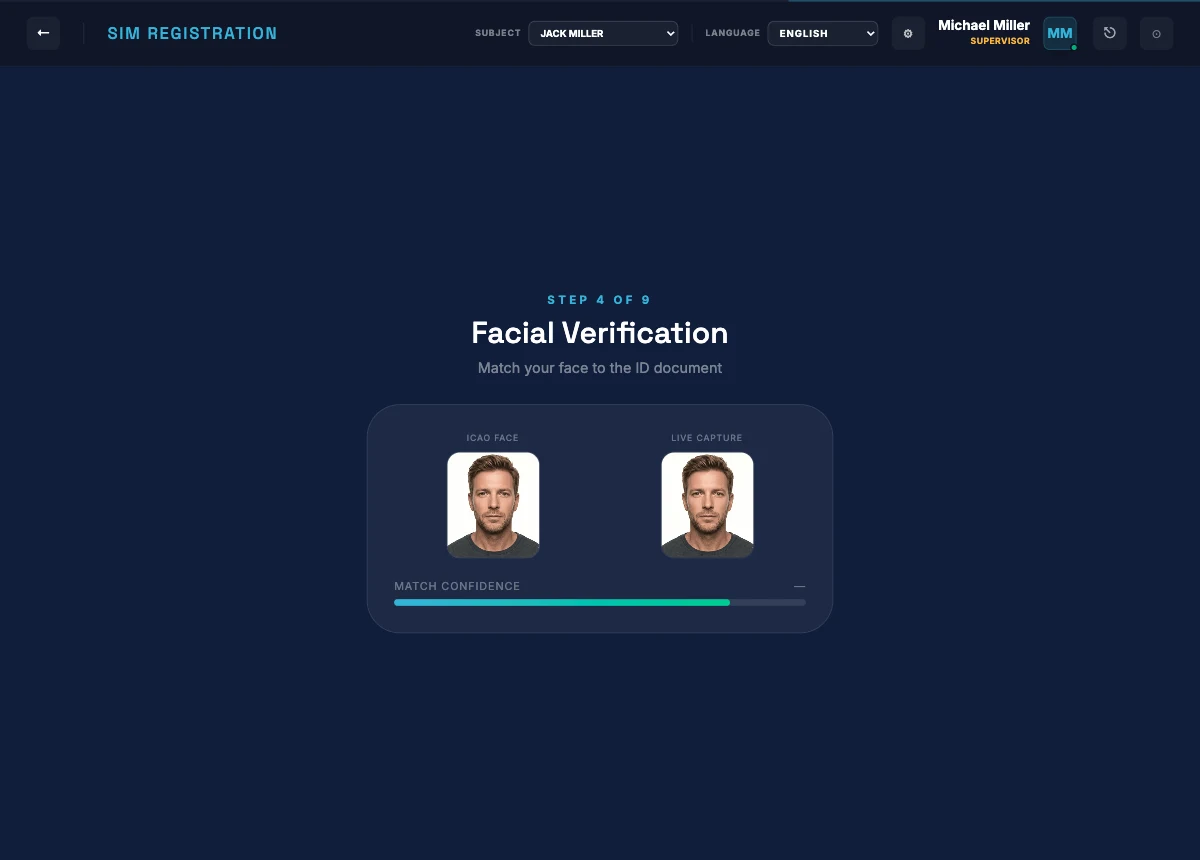
Liveness and face matching are equally important
Liveness and face matching answer two different questions, and both matter equally. Liveness establishes that a real person is present and participating in the current session. Polaris applies liveness and capture-quality checks to help detect presentation attacks such as printed photographs, replayed screens and other spoof attempts before a plausible-looking face is allowed anywhere near activation.
Face matching establishes that the live person is the subscriber they claim to be. The accepted live capture is compared with the trusted portrait recovered from the identity document, its NFC chip or an authorised identity source. The operator controls the match threshold and the response: approve automatically, request another capture, step up to an additional check or send the case for review. Strong liveness without a reliable match proves presence but not identity; a strong match without liveness can still be vulnerable to presentation attacks.
Once a subscriber has been enrolled with an approved 3D facial template, the same identity can become a powerful authentication credential for later journeys. A fresh, liveness-checked 3D capture can be matched 3D-to-3D before a SIM swap, replacement eSIM, number port, account recovery or other high-risk change. In the supported 3D-to-3D configuration, AXON can operate at a false-match rate as low as 1 in 125 million, giving the MNO a high-assurance way to recognise the enrolled subscriber without sending them back to a store.
Together, liveness, face matching and the operator’s policy turn identity proof into an explicit, repeatable control with evidence and an audit trail — not a visual judgement made by an agent.
Prove the document is live — then verify what is inside it
Remote document verification has to answer more than “can we read the fields?” AXON applies document-liveness and recapture checks to help determine whether a physical credential is being presented to the camera rather than a screenshot, an image displayed on another screen, a printout or a photocopy. The capture can be assessed for natural perspective and edge behaviour, changing reflections and surface response, as well as display and print artefacts such as pixel patterns, moiré and flat copied imagery. Suspicious evidence can be rejected, recaptured or routed for review before activation continues.
Document intelligence then looks for signs of alteration within the credential itself. These can include portrait substitution, edited biographic fields, inconsistent fonts or spacing, broken background patterns, implausible layouts and damaged security features. Data recovered from the visible zone can be cross-checked against the MRZ, barcode and chip where those sources are present. A mismatch becomes an explicit risk signal instead of a detail an agent is expected to notice by eye.
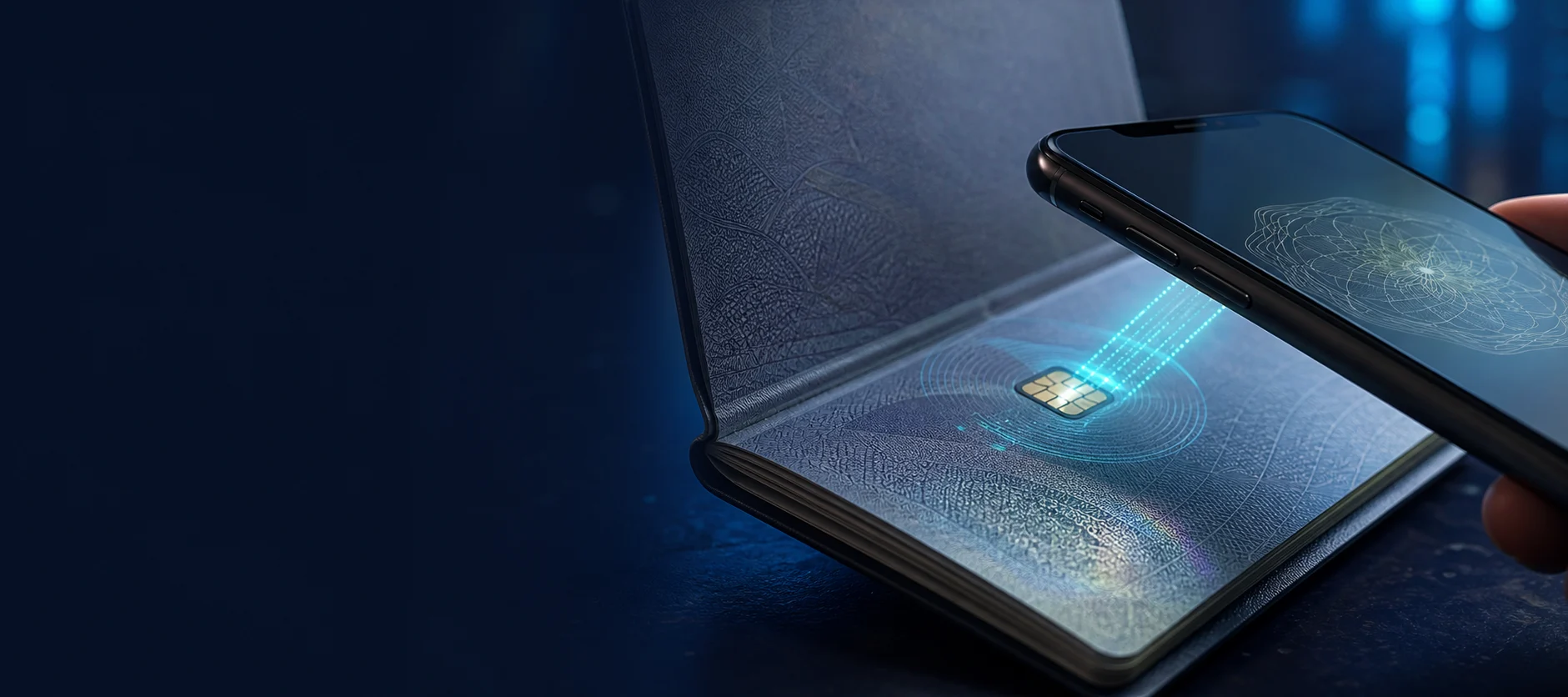
Where an ePassport contains an NFC chip, the phone can use the document’s MRZ details to open a secure session and recover the protected biographic data and high-quality chip portrait. Passive authentication checks whether the chip data is still signed as issued; where the relevant country trust certificates are available, that signature can be validated back to the issuing authority. Where the document and phone support the relevant chip-authentication mechanism, the workflow can also gather stronger evidence that it is communicating with the genuine chip rather than merely reading copied data. The trusted chip portrait is then matched to the live, liveness-checked applicant.
AXON also supports NFC-capable GCC national ID cards and other compatible contactless identity cards. Document-specific profiles handle the data structures and access controls used by each supported card scheme, allowing approved demographic fields and the stored portrait to enter the same verification workflow. This is particularly important in GCC markets, where the national ID card may be the subscriber’s primary credential rather than a passport.
The result is a layered assurance chain rather than reliance on one check: physical-document liveness, tamper and recapture detection, cross-source consistency, cryptographic chip verification where available, and a facial match to the live applicant. The MNO decides which evidence is mandatory for each subscriber type, channel, product or risk level, and AXON retains the checks, outcomes and exceptions in one auditable decision trail.
Why an MNO should move now
The first operators to make instant activation reliable will not only reduce acquisition friction. They will redefine customer expectation. Once subscribers know they can move from intent to active service in minutes, the operator still asking them to visit a shop or wait for a SIM starts to look structurally slower.
AXON brings the pieces together: biometric identity verification, facial liveness and matching, ePassport and supported GCC-card NFC reading, document intelligence, dynamic number selection, number porting, SIM-swap controls, eSIM-ready workflow, central audit, exception management and integration into the operator’s activation, credit and provisioning stack. The goal is simple but commercially serious: turn remote intent into a live, compliant subscriber before the customer has time to drift — then keep serving that subscriber digitally.