

Instant Activation · Digital Subscriber Onboarding
From First Click to Live on the Network.
Identity, number and SIM/eSIM in one digital activation.
A customer sees an offer, proves who they are, passes your risk rules, chooses a number and connects — without a store visit, a courier hand-off, or a “we’ll activate you later” moment where the lead leaks away. The operator keeps control of the experience, the decision and the network hand-off.
Up to 30%
of new activations, digital channel — customer-reported, AXON deployments
350M+
SIM cards registered, across 20+ operator and authority deployments
The short answer
Every step between wanting a SIM and being live on the network is a chance to lose the customer.
Mobile growth is increasingly fought outside the store. App campaigns, handset retailers, MVNO partners, travel brands, fintech wallets and comparison sites are all acquisition surfaces. If an operator cannot verify and activate a subscriber inside those surfaces, the lead goes cold before it becomes revenue.
Removing the last physical step is not a cosmetic improvement to an onboarding form. It lets the operator sell where the demand appears, reduce dependence on dealer capacity, and move the customer from campaign click to active service while intent is still high.
The commercial case
The cost of leaving intent unconverted.
Paid acquisition creates intent. Activation is where that intent is either converted or lost — and it is usually lost in the same four places.
Verification and provisioning are separate steps
Identity is confirmed, but number selection or SIM delivery is handled later, in another system or another visit.
The digital lead is pushed back into a queue
A store, a dealer, or a manual exception, at the exact moment intent was highest.
Every channel applies a different rule
A different decision and a different quality of record depending on which door the customer used.
Customer, SIM, MSISDN and evidence are split across systems
Making disputes, care escalations and fraud investigations expensive long after activation.
Every hand-off between intent and activation is a place the customer, the margin or the record can be lost.
What we measure with you in pilot
How it runs
From offer to active subscriber, in one controlled journey.
One journey, entered from wherever the customer already is, with the same operator rules and the same registration record behind every channel.
01
Entry
02
Identity capture
03
Liveness
04
Document authenticity
05
Deduplication
06
Consent
07
Decision
08
Number selection
09
Provisioning
10
Active
In-app, web link, or QR code at a dealer or retail point. Document capture and NFC chip read where the document supports it. Proven to be a real, present person — not a photo, replay or injected feed. OCR, MRZ, barcode and chip data extracted, cross-checked and tested for tampering. Searched 1:N against the existing subscriber base. Explicit, recorded, and bound to the registration record. Signals combined into one outcome — approve, refer or decline. Live inventory, premium and reserved ranges, or port-in. eSIM delivery or physical SIM binding, with ICCID/MSISDN allocation. On the network, with a complete registration record behind the activation.
No physical SIM. No store visit. No dealer hand-off.
Sell beyond the store
Turn online demand into completed activations while the customer is ready to buy — not after a return visit, dealer hand-off or manual queue.
No dealer commission on self-service
A registration normally carries a dealer or agent commission. A subscriber who self-activates never touches that channel, so that commission is not paid on that registration — a channel cost becomes a verification cost instead.
Less plastic. Less logistics.
Every eSIM activation is a SIM card never manufactured, packaged, shipped or distributed — cutting cost, paper-heavy registration and the carbon footprint of the activation channel.
Stores and agents stay, where they help
Self-service is applied where it is appropriate. Assisted channels remain for customers who need them, running the same verification engine and the same thresholds.
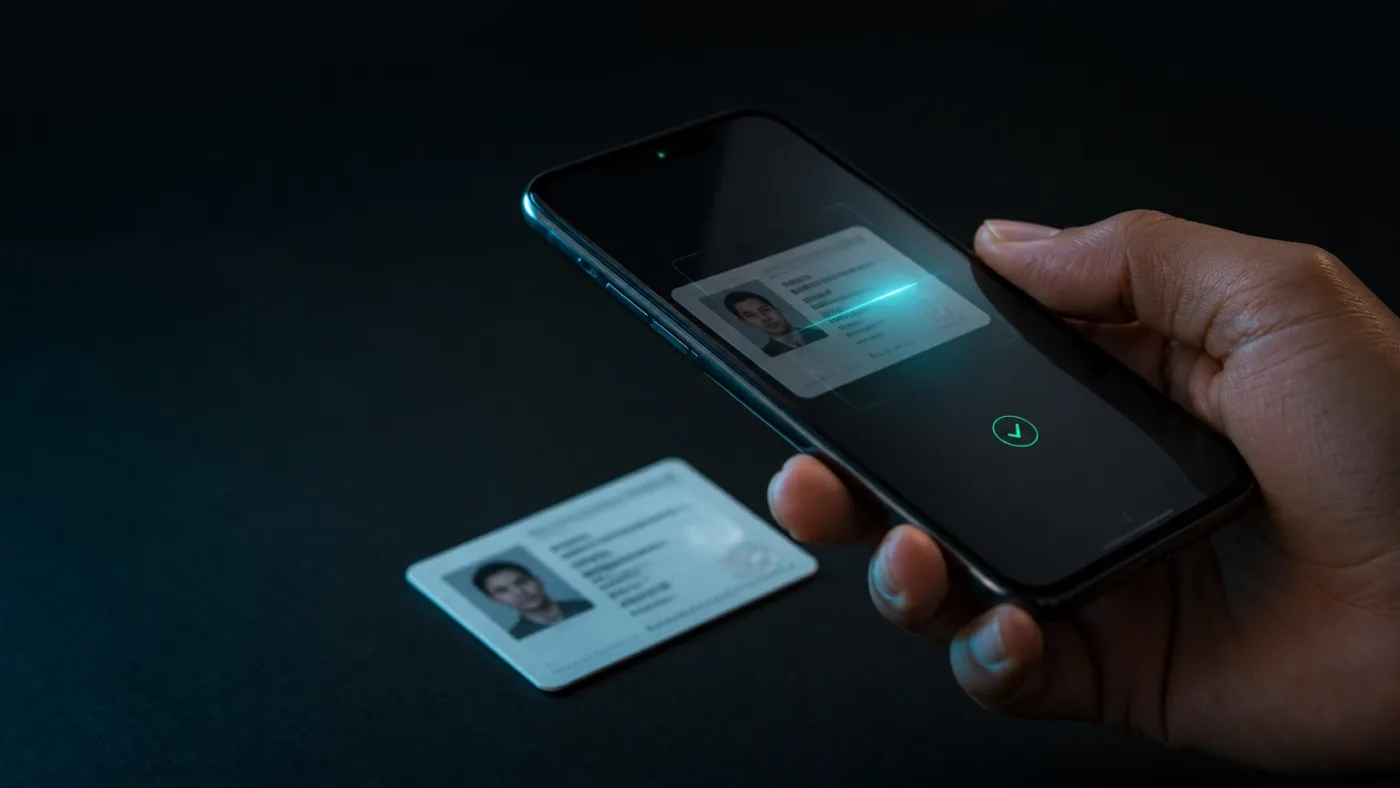
Configure the checks, retry limits, referral paths, approval thresholds, number eligibility, consent language and provisioning hand-off per market or channel — without creating a separate process for every acquisition surface.
Your product
Your Brand. Your Journey. Your Rules.
Every screen your customer sees is yours. Deploy under your own branding, with verification thresholds, workflows and approval rules configured for your market, risk appetite and operating model.
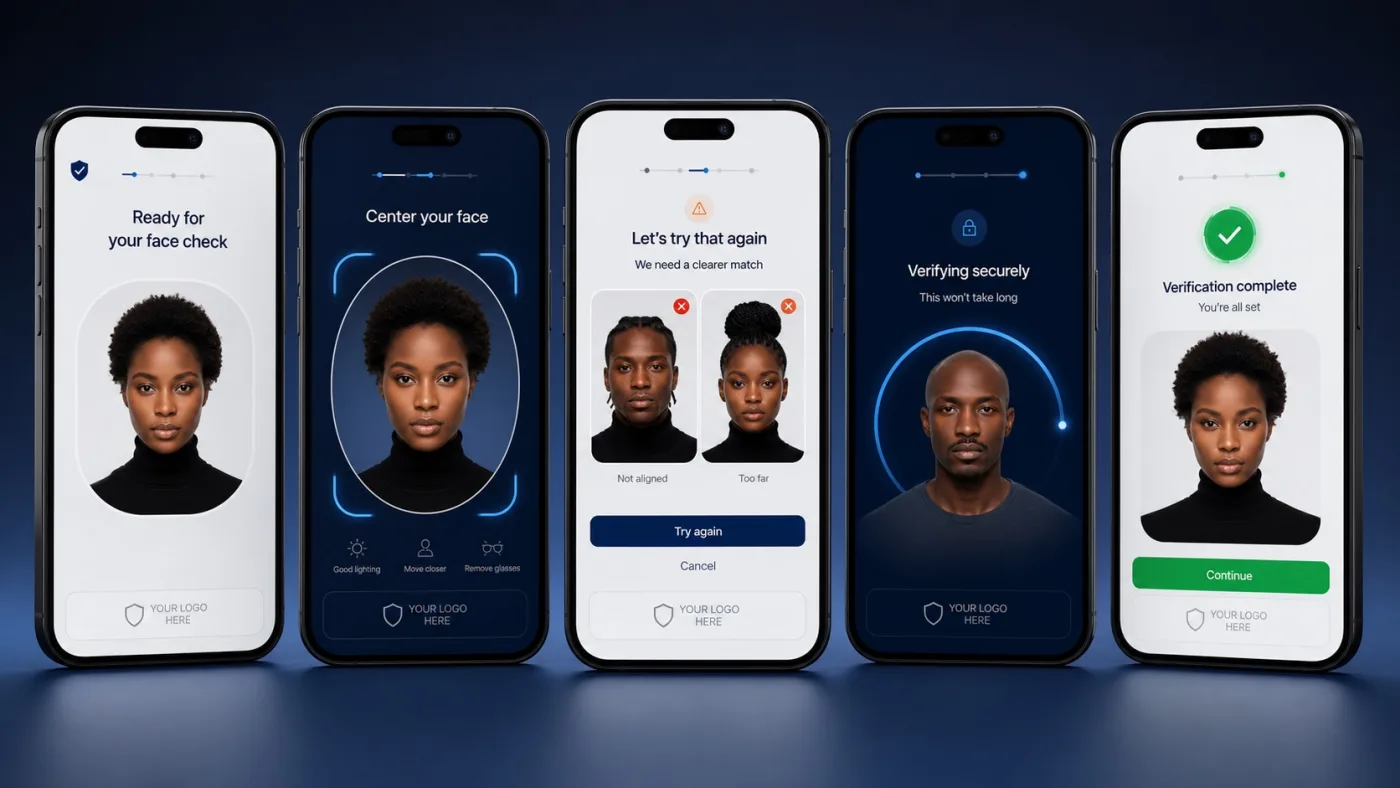
The customer stays in an operator-owned experience from first click to activation. Use your brand, colours, language, consent wording and channel entry points while Axon supplies the verification and activation capability underneath — available today, configured rather than rebuilt for every market.
Verification
Fast is only valuable when it protects growth.
Every check has an operator outcome: let a good customer through, route an uncertain case to review, or stop a risky registration before it reaches the network.
Capture Quality
Stops a poor image from becoming a false reject, a manual exception or a second attempt.
Facial Liveness
A real, present person completing the journey — not a replay or presentation attack.
Document Authenticity
OCR, MRZ, barcode and NFC chip reads, cross-checked, with tamper and replay detection.
Face-to-Document Match
The live face compared with the document portrait, contributing to one overall decision.
Duplicate Identity Search
1:N against the enrolled subscriber base, so the same person cannot register twice.
Watchlist & Device Rules
Market-specific risk, device, network, PEP/AML and approval policies you choose to enforce.
Approve, refer or decline — with a reason, a configurable threshold and evidence for the path taken.
Face-matching performance — three figures, never interchanged
3D:3D Re-Verification
The returning subscriber, against their own enrolled template.
1 in 125,000,000
3D:2D Face-to-Document
The live person, against their ID portrait.
Up to 1 in 2,000,000
1:N Duplicate Search
The same face, enrolled earlier under different details.
Up to 1 in 1,000,000,000
Document forensics run near 97% accuracy — never as strong a signal as 3D liveness, and weighted accordingly in the risk score.
1:N subscriber search
One Customer. Visible Across the Base.
A 1:1 registration check can confirm the document in front of it, but it cannot see that the same person is already present elsewhere in the subscriber base. 1:N search gives the operator that missing view — without assuming that every legitimate multi-SIM customer is fraud.
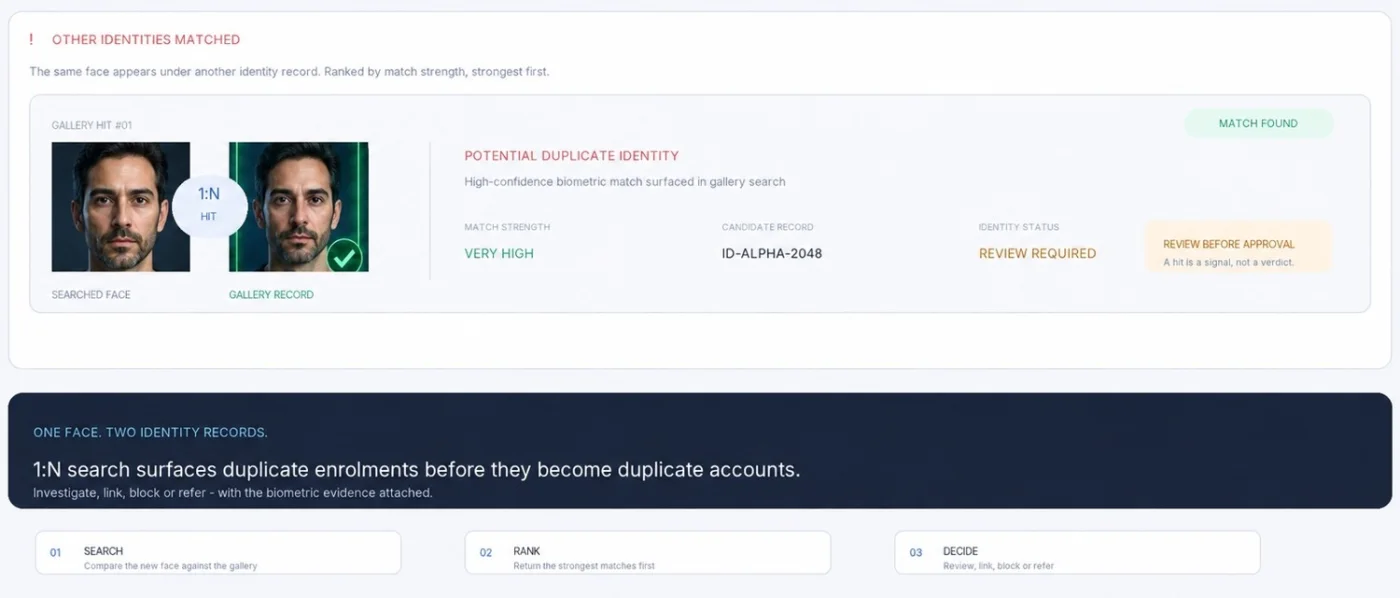
Protect the subscriber base, reduce duplicate-registration risk, and give fraud operations a defensible signal before a new identity reaches the network.
The differentiator
Verification Is Half the Job. Activation Is the Other Half.
A verification decision is not the same thing as an active subscriber. The operator still needs number selection, SIM/eSIM provisioning, CRM/BSS/OSS updates and a reliable status when one of those hand-offs fails.
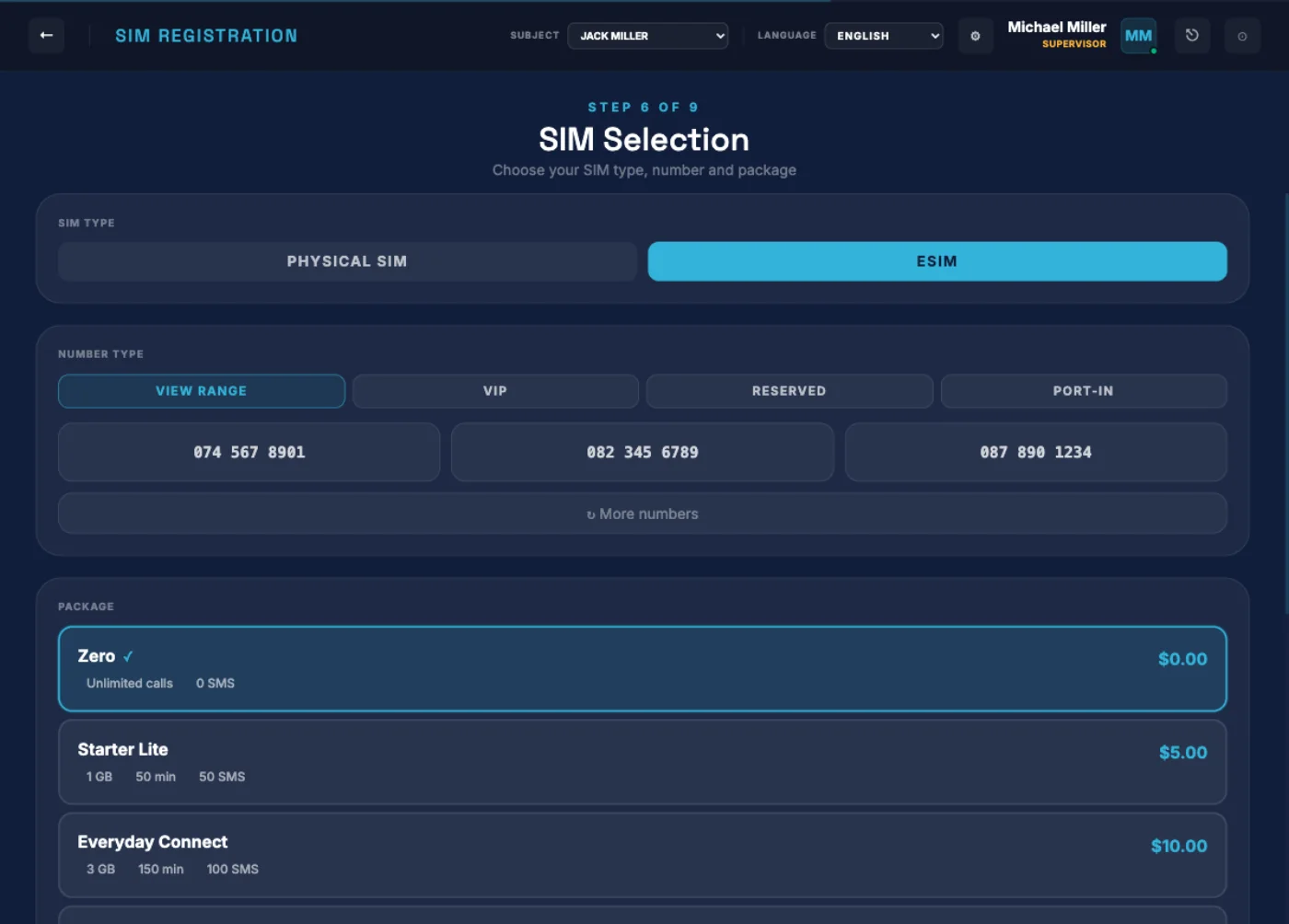
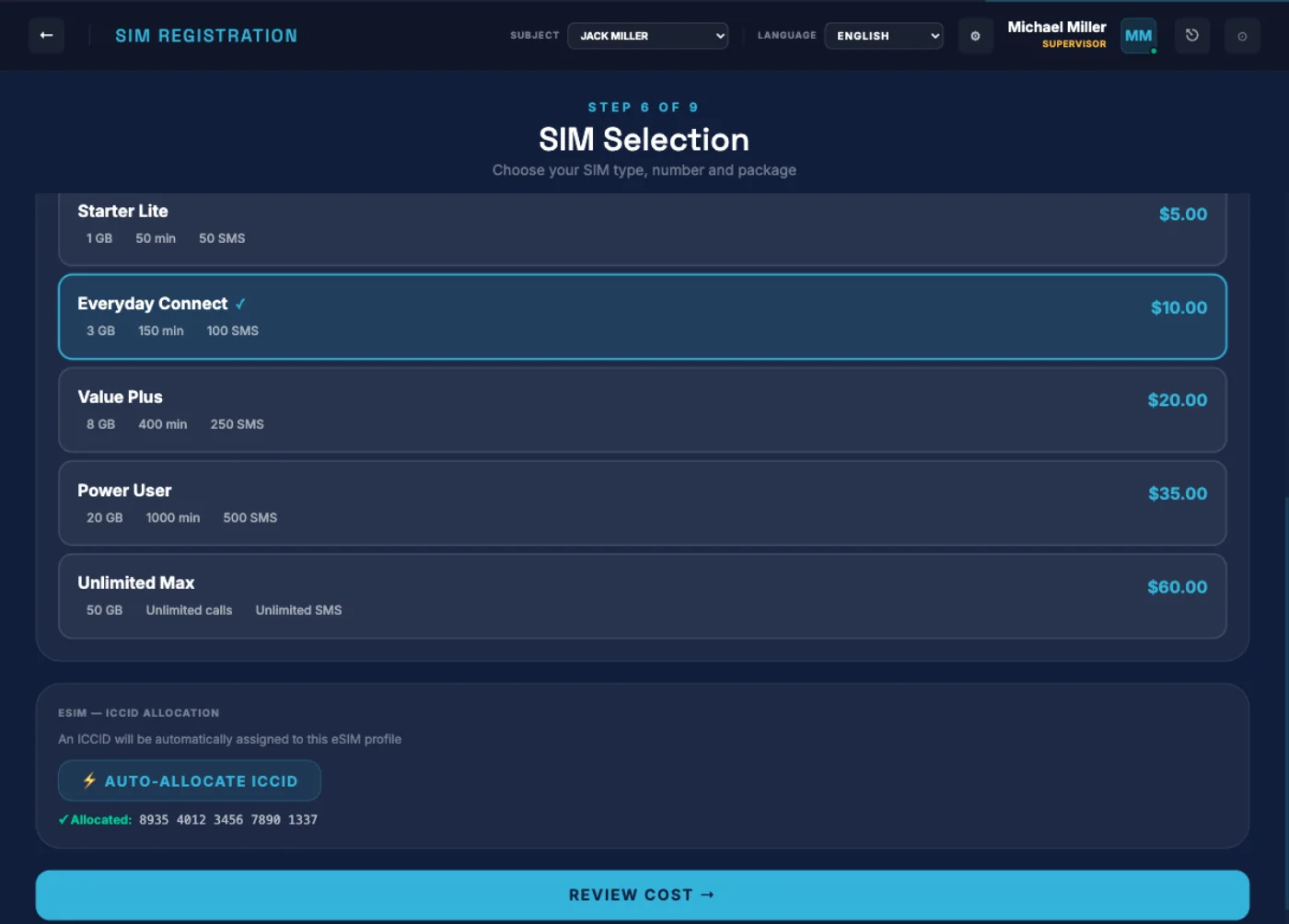
eSIM selection with live number inventory · automatic ICCID allocation
ICCID / MSISDN Binding
The verified identity bound to the SIM and the number at the moment of activation, so the registration record and the network record are the same record. Already running in production at operator scale.
Dynamic Number Allocation
Live inventory exposed to the subscriber — an available range, a premium or reserved number, or port-in — without an agent re-keying the request.
eSIM Profile Delivery
Secure delivery as the final step of the same journey, so the customer connects in the same sitting.
CRM / BSS / OSS Hand-off
The verified record passed to the systems that own the subscriber, through provider-agnostic connectors, webhooks and status updates.
Exception & Reconciliation
If verification passes but provisioning fails, the operator sees the state, retries or refers — without asking the customer to start again.
Identity, number and SIM bound together in one transaction — with a clear activation status and one auditable record.
Where it runs
One activation engine across every acquisition channel.
The operator should not have to maintain a different verification policy for every route to market.
Self-Service, In-App
The customer completes it themselves, in your app or a browser, on their own device.
Dealer & Agent Assisted
Agent-guided registration at a dealer, with the same checks and the same thresholds.
Retail Store
In-store activation on the same pipeline, so a walk-in produces the same quality of record.
Partner & Embedded
Banks, retailers, travel brands and fintech surfaces, through the API.
Same verification engine, same risk rules, same audit trail — whichever door the subscriber came through.

Registration record & audit
Every Activation, Under Control Later.
An activation needs to stand up later — in customer care, a chargeback or dispute, a fraud investigation, an internal audit or a regulatory review. The evidence is created as part of the activation, not reconstructed afterwards.
Complete registration record
Every check, its result and its evidence, kept against the subscriber record.
Append-only audit
Records cannot be updated or deleted. Each is hash-chained to the one before it.
Access is an event
Reading a subscriber’s biometric is recorded like any other action, with operator, time and reason.
Retention you set
Evidence and audit records each have their own retention period, applied automatically.
Encrypted at rest
Biometric data encrypted under keys held separately from the data.
Export and hand-off
Registration evidence retrievable by care, fraud operations or an approved downstream system.
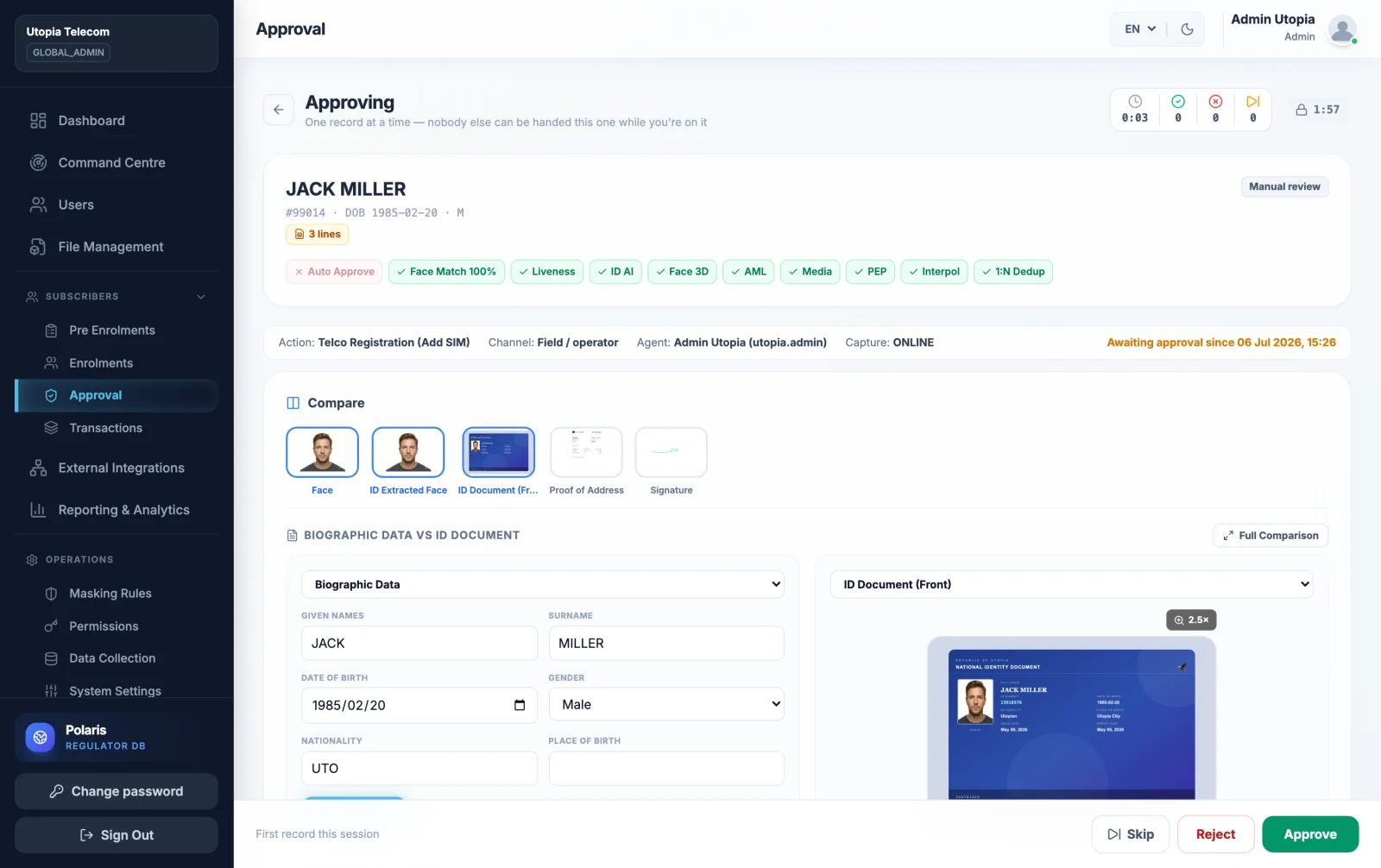
The record that supports the operator, the customer and the regulator is a by-product of activation, not a separate reporting exercise.
Track record
Proven at Subscriber Scale.
Axon has been running subscriber identity and registration programmes for mobile network operators since 2005 — across digital, dealer and field channels, where the identity decision has to become a live subscriber.
350M+
SIM cards registered
500M+
Identities registered or verified
20+
Operators & authorities served
25+
Countries with customers
20+
Years registering subscribers for MNOs
That is subscriber-registration scale, not generic identity-verification scale.
See it on your channels
Instant activation, running on your channels.
We’ll work from expected activation volume, regulatory context and existing infrastructure, then design the journey, thresholds and hosting model around it.
Common questions
Instant activation, without the fog.
Clear answers for growth, fraud, IT and compliance teams.
What is instant activation?+
A single journey that takes a customer from seeing an offer to being an active subscriber — identity verification, risk approval, number selection and SIM or eSIM provisioning, without a store visit or a courier hand-off.
Does this replace our existing onboarding, or plug into it?+
Either. It can provide the complete capture and activation journey, or supply the verification and deduplication checks behind a journey you already own. The integration surface is the same in both cases.
Can we keep our own app and customer experience?+
Yes. Use an Axon-hosted, white-label journey, or connect your own front end to the verification and activation services through the API. The operator retains the brand, channel entry point and policy decisions.
How is this different from an identity-verification product?+
Identity verification returns a decision — at which point the subscriber still is not on the network. This binds that decision to the ICCID and MSISDN at the point of activation, so the registration record and the network record are one record, and number selection, provisioning and CRM hand-off happen inside the same journey.
Can subscribers choose their own number?+
Yes. Live number inventory can be exposed in the journey, including premium and reserved ranges, and existing numbers can be ported in without an agent re-keying the request.
What stops one person registering hundreds of SIMs?+
Every registration is searched 1:N against the enrolled subscriber base, so the same person can be surfaced even when the name or document changes. The operator decides whether the result is allowed, referred or blocked — which protects legitimate multi-SIM use cases as well as the base.
Does it work for dealers and retail, or only in-app?+
All of them — self-service, dealer-assisted, retail and embedded partner channels, on the same verification engine and the same thresholds.
Can we run it under our own brand?+
Yes. Full white-label branding is available as standard, with thresholds, workflows, retry paths and approval rules configured to your market and channels.
Where is it hosted?+
Axon-hosted, in your private cloud, or fully on-premise — selected to match your security, data-residency and operating requirements.
What happens when a customer fails a check or provisioning fails?+
The journey applies configurable retries, referral paths and reasons. Verification, number allocation and provisioning statuses remain visible so the operator can resolve an exception without losing the customer or creating a second registration record.
What does the operator need to integrate?+
Four things: the channel that starts the journey (app, web or QR), number inventory for allocation and port-in, SIM or eSIM provisioning, and the CRM/BSS/OSS that owns the subscriber record. Axon supplies identity verification, deduplication and the decision, connected through REST APIs, provider-agnostic connectors and webhooks — so each of the four is an interface, not a rebuild.
Can rules differ by market, segment or channel?+
Yes. Thresholds, approval paths, consent, retention, number eligibility and provisioning rules can be configured for the market and operating model, subject to the agreed deployment scope.
Does the operator still pay dealer commission on a self-service activation?+
No. A registration normally carries a dealer or agent commission — the channel cost of signing a subscriber up. A subscriber who self-activates through this journey never touches that channel, so that commission is not paid on that registration. Every activation that moves from dealer-assisted to self-service converts a channel cost into a verification cost instead.
Does eSIM activation reduce environmental impact?+
Yes. Every eSIM activation is a SIM card never manufactured, packaged, shipped or distributed, and a registration that does not consume printed forms or a physical retail visit. Alongside the cost saving, that reduces the plastic, logistics and carbon footprint of the activation channel.
What does a subscriber need to activate — a physical SIM or a store visit?+
Neither. No physical SIM, no store visit and no dealer hand-off. The subscriber proves who they are, chooses a number and a package, and the eSIM profile is delivered in the same sitting, from their own phone or browser.
Does the identity captured at activation get reused later?+
Yes — enrol once, verify for life. Once a subscriber has a trusted 3D face record, the platform combines 3D liveness and 3D:3D face matching to re-verify them remotely before sensitive account actions such as SIM swap, port-out, change of ownership, PIN or PUK reset and high-value mobile-money transactions. The same verification strength follows the customer well beyond the original registration journey, without a repeated document capture.
How is it priced?+
Per attempted session, tiered by volume, so unit cost falls as activation volume grows. Deployment model and the scope of provisioning integration are priced separately.
What is an attempted session, and why is it charged rather than only successful ones?+
A session is charged when it is attempted and processed — whatever the outcome, whether it approves, refers or declines. The verification work is performed either way: the liveness check runs, the document is read and tested, the biometric search executes and the risk decision is produced. A declined session is not a failed one; catching a fraudulent or duplicate attempt is the control working, and it consumes the same processing as an approval.
What is included in one session?+
A session is all-inclusive. One price covers whatever checks that session requires — facial liveness, document verification and OCR, 1:1 face matching, 1:N duplicate search, watchlist screening and the risk decision — rather than metering each check separately.